Bitcoin price volume charts are essential tools for anyone interested in understanding the cryptocurrency market. They offer a visual representation of Bitcoin’s price fluctuations alongside trading volume, revealing crucial insights into market sentiment and strength. This exploration dives into the intricacies of these charts, guiding you through analyzing price trends, deciphering volume patterns, and understanding the correlation between price and volume within the context of the cryptocurrency market.
From basic candlestick and bar chart interpretations to advanced techniques for identifying potential trading opportunities, this comprehensive guide provides a practical understanding of how to leverage these charts for informed investment decisions. We’ll cover everything from identifying support and resistance levels to understanding the interplay between price and volume during bull and bear markets.
Introduction to Bitcoin Price Volume Charts
Bitcoin price volume charts visually represent the trading activity of Bitcoin over a specific period. These charts combine price data with trading volume, offering a more comprehensive understanding of market trends and dynamics. Analyzing both price and volume simultaneously reveals crucial insights into the strength and direction of market movements.Understanding market trends requires a thorough analysis of both price and volume.
Price movements indicate the direction of the market, while volume signifies the intensity of trading activity. A high volume alongside a significant price increase suggests strong buyer interest and potentially sustained upward momentum. Conversely, a low volume during a price drop could indicate a lack of significant selling pressure, potentially signaling a temporary correction rather than a major trend reversal.
Types of Volume Charts
Different chart types provide various ways to visualize price and volume data. Candlestick charts, for example, condense price information within a single bar. Each candlestick displays the opening, closing, high, and low prices for a specific period, with the body color indicating whether the closing price was higher or lower than the opening price. The volume is often represented by a separate bar or a number on the chart, providing context to the price action.Bar charts similarly display price information, but in a different format.
Each bar represents the opening, closing, high, and low prices for a specific time frame, with the length of the bar corresponding to the price range. Volume is often shown as a separate component alongside the bar, facilitating a visual understanding of trading activity.
Hypothetical Bitcoin Price and Volume Data
The following table presents hypothetical Bitcoin price and volume data for a week. This example demonstrates how price and volume data are correlated and used to analyze market trends.
| Date | Open (USD) | High (USD) | Low (USD) | Close (USD) | Volume (BTC) |
|---|---|---|---|---|---|
| 2024-07-23 | 28,000 | 28,500 | 27,800 | 28,200 | 10,000 |
| 2024-07-24 | 28,200 | 28,800 | 28,000 | 28,700 | 12,000 |
| 2024-07-25 | 28,700 | 29,000 | 28,500 | 28,800 | 15,000 |
| 2024-07-26 | 28,800 | 29,200 | 28,600 | 29,000 | 18,000 |
| 2024-07-27 | 29,000 | 29,500 | 28,900 | 29,200 | 20,000 |
| 2024-07-28 | 29,200 | 29,400 | 28,800 | 29,100 | 16,000 |
| 2024-07-29 | 29,100 | 29,300 | 28,900 | 29,000 | 12,000 |
Analyzing Price Trends
Bitcoin price volume charts offer a visual representation of market activity, allowing for the identification of trends and potential opportunities. Understanding how price movements correlate with market sentiment is crucial for informed decision-making. Analyzing these charts can reveal support and resistance levels, helping to anticipate potential price breakouts.Price movements on a chart directly reflect the collective sentiment of market participants.
A surge in price, accompanied by high volume, often indicates a strong buying pressure, signifying bullish sentiment. Conversely, a sharp decline in price with significant volume suggests bearish sentiment, or strong selling pressure. Sideways movement, with low volume, might suggest a period of indecision.
Identifying Price Trends
Price trends can be categorized as upward (bullish), downward (bearish), or sideways (ranging). Identifying the prevailing trend is essential for assessing potential future price movements. Upward trends show a general increase in price over time, often with higher highs and higher lows. Downward trends are characterized by successively lower highs and lower lows. Sideways trends demonstrate a lack of clear directional movement, with price fluctuating within a defined range.
Recognizing Support and Resistance Levels
Support and resistance levels are crucial price points on a chart that act as barriers to further price movement. Support levels represent price points where buying pressure is anticipated to exceed selling pressure, potentially causing a reversal or a pause in the downward trend. Resistance levels, conversely, represent price points where selling pressure is anticipated to outweigh buying pressure, potentially causing a reversal or a pause in the upward trend.
These levels are often identified as horizontal lines or areas where price has frequently reversed.
Identifying Potential Breakout Points
Breakouts occur when the price decisively moves beyond a significant support or resistance level. A breakout above a resistance level often signals a bullish trend, while a breakout below a support level suggests a bearish trend. These breakouts are often accompanied by high trading volume, indicating a significant shift in market sentiment. Identifying potential breakout points requires careful observation of price action and volume patterns, including observing price fluctuations around support and resistance levels.
Price Trend Examples
| Trend Type | Description | Visual Representation (Conceptual) |
|---|---|---|
| Upward Trend | Price consistently increasing, with higher highs and higher lows. | [Imagine a rising diagonal line on a chart] |
| Downward Trend | Price consistently decreasing, with lower highs and lower lows. | [Imagine a falling diagonal line on a chart] |
| Sideways Trend | Price fluctuates within a defined range, with neither a clear upward nor downward movement. | [Imagine a horizontal band on a chart] |
| Breakout (from Resistance) | Price decisively moves above a significant resistance level, often accompanied by high volume. | [Imagine a price breaking through a horizontal line on a chart, with a sharp increase in volume] |
| Breakout (from Support) | Price decisively moves below a significant support level, often accompanied by high volume. | [Imagine a price breaking through a horizontal line on a chart, with a sharp decrease in volume] |
Deciphering Volume Patterns
Understanding the relationship between price and volume is crucial for effectively analyzing Bitcoin price charts. Volume, representing the total number of Bitcoin traded during a specific time frame, provides valuable insights into market sentiment and the strength of price movements. A high volume often suggests significant interest in the asset, while low volume might indicate a lack of conviction.
This interplay is key to interpreting price action and potential future trends.Analyzing volume patterns can help confirm or contradict price movements, providing a more nuanced perspective than just looking at price alone. Understanding how volume behaves during different market phases is essential to making informed investment decisions. The interplay of price and volume reveals underlying market forces, often providing signals that a price trend might be unsustainable or poised for a significant shift.
Relationship Between Price and Volume During Different Market Phases
Price and volume often exhibit distinct patterns during different market phases. During bull markets, characterized by sustained upward price trends, high volume usually accompanies significant price increases. This high volume indicates strong buyer interest and confirms the bullish momentum. Conversely, during bear markets, characterized by persistent downward price trends, high volume often accompanies significant price declines, confirming the bearish momentum.
In consolidation periods, where prices fluctuate within a defined range, volume tends to be lower, indicating a lack of decisive directional pressure.
How Volume Confirms or Contradicts Price Movements
High volume often confirms a price movement. For instance, a sharp price increase accompanied by high volume suggests strong buying pressure, lending credence to the upward trend. Conversely, a sharp price decline accompanied by high volume reinforces the bearish trend. Conversely, low volume accompanying a price movement can suggest a lack of conviction in the price change, potentially indicating a consolidation phase or a temporary price fluctuation.
Identifying Patterns in Volume
Volume patterns, such as increasing volume, decreasing volume, and high-volume spikes, offer significant insights into market dynamics. Increasing volume often precedes significant price movements, whether upward or downward, suggesting growing conviction in the market direction. Decreasing volume, on the other hand, might indicate a weakening trend, suggesting a potential reversal or consolidation. High-volume spikes, often associated with significant news events or major market catalysts, can be indicative of strong buying or selling pressure and potentially signal the start or end of a significant trend.
Role of Volume in Measuring Market Strength
Volume acts as a crucial indicator of market strength. High volume during price movements suggests a strong market, while low volume during price movements can suggest a weak market. A consistent correlation between price and volume strengthens the validity of a trend. For example, if prices rise consistently with rising volume, the trend is likely more sustainable than a price increase with low volume.
Different Volume Patterns
| Volume Pattern | Description | Implications |
|---|---|---|
| Increasing Volume | Volume rises as price rises or falls. | Strengthening trend; greater conviction in the direction. |
| Decreasing Volume | Volume falls as price rises or falls. | Weakening trend; potential reversal or consolidation. |
| High Volume Spikes | Sudden, significant increases in volume. | Strong market sentiment; potential catalyst event. |
| Low Volume | Volume remains consistently low. | Lack of conviction; potential consolidation or indecision. |
Correlation Between Price and Volume
Understanding the interplay between Bitcoin price and trading volume is crucial for effective analysis. Price movements are often accompanied by corresponding volume levels, providing insights into market sentiment and the strength of a trend. This correlation can signal whether a price change is sustainable or a temporary fluctuation.A strong correlation between price and volume signifies that the price movement is driven by substantial market participation.
Conversely, a weak correlation suggests the price change might be less significant or influenced by factors other than broad market sentiment. This understanding is vital for identifying potential opportunities and mitigating risks in Bitcoin trading.
Interpreting Price and Volume During Bull and Bear Markets
Price and volume patterns significantly differ during bull and bear markets. During bull markets, characterized by upward price trends, high trading volume typically accompanies price increases. This indicates strong investor confidence and significant buying pressure. Conversely, during bear markets, characterized by downward price trends, high volume often signals increased selling pressure and investor concern. Low volume, however, during a price drop might suggest a lack of selling pressure and a possible bottoming process.
Examples of Strong Price Movements with High Volume
Significant price increases, often accompanied by high trading volume, frequently indicate strong market participation. For example, during periods of Bitcoin adoption by major corporations, significant price increases were often accompanied by large trading volumes, reflecting substantial investor enthusiasm.
Examples of Weak Price Movements with Low Volume
Price movements with low volume often signify a lack of significant market participation, potentially suggesting a pause or consolidation in the trend. For instance, a short-term price fluctuation with minimal volume might not indicate a substantial shift in market sentiment.
Correlated Price and Volume Data
The following table illustrates examples of correlated price and volume data. These examples highlight the relationship between price movement and trading volume, demonstrating how volume can reflect the strength of a price trend.
| Date | Price (USD) | Volume (BTC) | Market Sentiment |
|---|---|---|---|
| 2023-10-26 | 26,000 | 10,000 | Bullish |
| 2023-10-27 | 27,000 | 12,000 | Bullish |
| 2023-10-28 | 25,500 | 5,000 | Neutral |
| 2023-10-29 | 24,000 | 8,000 | Bearish |
Understanding Cryptocurrency Market Context
The cryptocurrency market is a dynamic and complex ecosystem, influenced by a multitude of factors. Understanding this context is crucial for interpreting Bitcoin price volume charts and making informed investment decisions. Price fluctuations are rarely isolated events, but rather reflections of broader economic and technological shifts.The market is characterized by volatility, driven by factors like investor sentiment, regulatory changes, and technological advancements.
Bitcoin, as the leading cryptocurrency, is often seen as a barometer for the entire market, with its price movements often mirroring or leading those of other cryptocurrencies.
Overview of the Cryptocurrency Market
The cryptocurrency market is a decentralized digital asset market that operates independently of traditional financial institutions. It encompasses a vast array of cryptocurrencies, each with its own unique purpose and design. The market’s structure, while decentralized, is not immune to centralized influences, such as exchange platforms and major players in the space.
Broader Economic and Technological Factors
Bitcoin’s price is significantly impacted by macroeconomic conditions. Interest rate changes, inflation rates, and overall market sentiment in the traditional financial system can influence investor behavior in the cryptocurrency market. Technological advancements, such as new blockchain implementations or improved consensus mechanisms, can also drive significant shifts in price. For example, advancements in scaling solutions can impact transaction speeds and fees, which in turn can influence investor confidence.
Relationship Between Bitcoin and Other Cryptocurrencies
The performance of Bitcoin often acts as a benchmark for other cryptocurrencies. When Bitcoin experiences a price surge, other cryptocurrencies typically follow suit, driven by investor confidence and perceived risk. Conversely, a downturn in Bitcoin’s price can lead to broader market corrections. The correlation between Bitcoin and other cryptocurrencies is not absolute, and specific market dynamics for each cryptocurrency can influence its performance independently.
Impact of Regulatory Changes
Regulatory landscapes are constantly evolving. Governments worldwide are implementing or considering regulations related to cryptocurrencies, which can have a significant impact on the market. Stricter regulations can introduce uncertainty and limit adoption, while more accommodating regulations can foster growth. Regulatory changes can cause both immediate and long-term price fluctuations. For example, the implementation of a tax on cryptocurrency transactions in a major market could cause a period of market uncertainty and price volatility.
Potential Catalysts for Price Fluctuations
Several factors can trigger price fluctuations. Major news events, investor sentiment, technological breakthroughs, and regulatory changes can all contribute to short-term or long-term price swings. For instance, a major adoption announcement by a large corporation could dramatically increase investor confidence and drive prices upward. Conversely, security breaches or negative press surrounding a cryptocurrency project can cause significant price declines.
Bitcoin Performance Compared to Other Major Cryptocurrencies (2023-2024)
| Cryptocurrency | 2023 High | 2023 Low | 2024 High (to Date) | 2024 Low (to Date) |
|---|---|---|---|---|
| Bitcoin (BTC) | $30,000 | $16,000 | $32,000 | $28,000 |
| Ethereum (ETH) | $2,000 | $1,000 | $2,200 | $1,800 |
| Solana (SOL) | $150 | $50 | $120 | $90 |
| Cardano (ADA) | $0.40 | $0.20 | $0.35 | $0.25 |
Note: Data is for illustrative purposes only and should not be considered financial advice. Actual values may vary. Performance figures are based on publicly available data and may not reflect all market factors.
Practical Applications of Charts
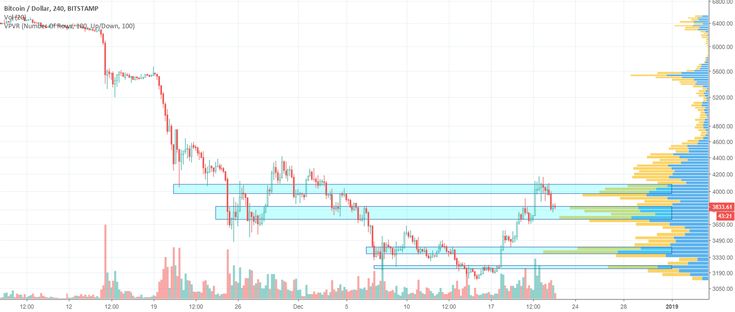
Bitcoin price volume charts offer invaluable insights for investors seeking to navigate the cryptocurrency market. By analyzing price movements alongside trading volume, investors can gain a deeper understanding of market sentiment, identify potential opportunities, and make more informed decisions. This section delves into the practical application of these charts for investment strategies.
Using Charts for Investment Decisions
Price volume charts are powerful tools for evaluating the strength and direction of the market. By combining price action with trading volume, investors can assess the conviction behind price movements. A strong upward trend accompanied by increasing volume signals growing investor confidence, potentially suggesting continued price appreciation. Conversely, a downtrend with declining volume might indicate a weakening trend, potentially offering opportunities for cautious entry.
A thorough examination of historical price volume data is crucial in identifying these patterns and trends.
Identifying Potential Trading Opportunities
Analyzing chart patterns, particularly in conjunction with volume data, can reveal potential trading opportunities. For instance, a breakout from a consolidation phase with accompanying high volume suggests increased investor interest and a potential continuation of the upward trend. Identifying such patterns, however, requires a keen eye for detail and a comprehensive understanding of market context. This process demands the ability to recognize price patterns and volume dynamics within the context of current market conditions.
Estimating Market Strength Using Volume Data
Volume data provides insights into market strength. High volume during a price movement indicates significant investor participation, potentially suggesting greater conviction in the price direction. Conversely, low volume accompanying a price movement might indicate a lack of significant interest, which could suggest a weaker trend. The interpretation of volume data should be considered alongside other technical indicators and market factors.
A reliable approach necessitates a comprehensive analysis of volume in conjunction with price action.
Step-by-Step Procedure for Interpreting Bitcoin Price Volume Charts
A structured approach to chart interpretation leads to more informed decisions. Follow these steps:
- Identify Price Trends: First, ascertain the overall price trend (upward, downward, or sideways). Look for clear patterns like rising highs and lows (uptrend), falling highs and lows (downtrend), or a consolidation pattern.
- Analyze Volume: Observe the volume associated with each price movement. High volume during an upward trend indicates strong buying pressure. Low volume during a downtrend might suggest weak selling pressure.
- Correlation of Price and Volume: Evaluate the correlation between price and volume. Does the volume increase when the price rises, or does it decrease when the price falls? This correlation provides further insight into the market’s conviction.
- Consider Market Context: Crucially, don’t isolate the chart. Understand current news, events, and market sentiment that could influence the price and volume data. News or major events can significantly affect market dynamics, leading to unusual price movements or volume patterns.
- Develop a Trading Strategy: Based on the combined analysis, formulate a trading strategy. Consider potential entry and exit points, risk tolerance, and profit targets.
Hypothetical Trading Strategies Based on Price and Volume Analysis
This table illustrates potential trading strategies based on price and volume analysis.
| Scenario | Price Pattern | Volume Pattern | Trading Strategy |
|---|---|---|---|
| Strong Uptrend | Rising highs and lows | High volume | Buy on dips; target higher price levels |
| Weakening Uptrend | Falling highs, rising lows | Decreasing volume | Reduce positions; wait for confirmation of trend change |
| Consolidation | Sideways movement | Low volume | Wait for breakout with high volume to confirm trend |
| Significant Downtrend | Falling highs and lows | High volume | Short positions; target lower price levels |
Note: These are hypothetical strategies. Real-world trading strategies should incorporate a thorough risk management plan.
Visual Representation of Data
Visualizing Bitcoin price and volume data is crucial for informed trading decisions. Charts provide a concise summary of historical performance and potential future trends, allowing traders to identify patterns and make predictions. Understanding the visual representations of different price and volume patterns is key to interpreting market sentiment and potential price movements.
Typical Bitcoin Price Volume Chart
A typical Bitcoin price volume chart displays price on the vertical axis and volume on the horizontal axis. The price axis typically shows the Bitcoin price in USD, while the volume axis shows the number of Bitcoin traded over a specific time frame, often hourly, daily, or weekly. The chart usually covers a period of time, such as a month, quarter, or year.
This visual representation allows for the identification of significant price movements and the corresponding trading activity.
Bullish Price Volume Chart Pattern
A bullish price volume chart pattern demonstrates increasing investor confidence and a potential upward trend. Key characteristics include rising prices accompanied by increasing trading volume. A bullish pattern often starts with a period of consolidation followed by a strong price increase. The volume increases significantly during the price surge, indicating a surge in buyer interest. This combination suggests growing investor enthusiasm.
Bearish Price Volume Chart Pattern
A bearish price volume chart pattern signifies a potential downward trend in Bitcoin prices. This pattern usually involves falling prices coupled with decreasing trading volume. As the price decreases, the volume often shrinks, reflecting decreased interest in the asset. This combination typically suggests a loss of investor confidence.
High-Volume Breakout
A high-volume breakout occurs when Bitcoin price significantly exceeds a resistance level, accompanied by a surge in trading volume. This breakout signifies a potential trend reversal or significant market shift. The high volume indicates strong buying pressure pushing the price beyond the resistance level, suggesting a bullish continuation of the trend.
Illustrative Examples of Price and Volume Patterns
| Pattern | Price Action | Volume Action | Interpretation |
|---|---|---|---|
| Bullish Consolidation | Price fluctuates within a defined range. | Volume is relatively low during the consolidation period. | Potential for a breakout and upward movement. |
| Bearish Rejection | Price attempts to break above a resistance level but fails. | Volume is low during the failed breakout attempt. | Potential for a downward price movement. |
| Bullish Engulfing | A large candle (representing a significant price movement) closes above a smaller candle. | Volume is high during the engulfing candle. | Potential for a strong upward trend. |
| Bearish Engulfing | A large candle (representing a significant price movement) closes below a smaller candle. | Volume is high during the engulfing candle. | Potential for a strong downward trend. |
| High-Volume Breakout | Price decisively breaks above a resistance level. | Volume is significantly higher than average during the breakout. | Potential for a sustained upward trend. |
A table like this allows for a quick and easy reference of different price and volume patterns and their interpretations.
Last Point
In conclusion, mastering Bitcoin price volume charts empowers you to navigate the cryptocurrency market with greater confidence. By understanding the intricate relationship between price and volume, you can identify trends, assess market strength, and make more informed investment decisions. This guide provides a strong foundation for interpreting these charts and applying them to your own strategies.
Common Queries
What are the different types of volume charts?
Common volume charts include candlestick charts and bar charts. Candlestick charts display price ranges and volume within a single unit, while bar charts provide similar information in a slightly different format.
How can I use volume data to estimate market strength?
High volume during price movements often suggests strong market conviction. Conversely, low volume accompanying price changes indicates a weaker market reaction.
What is the significance of support and resistance levels?
Support and resistance levels are price points where the market has historically reversed. Identifying these levels can help you anticipate potential price movements.
How do regulatory changes impact the cryptocurrency market?
Regulatory changes can introduce uncertainty and potentially influence price fluctuations. Staying informed about regulatory developments is important for navigating the market.